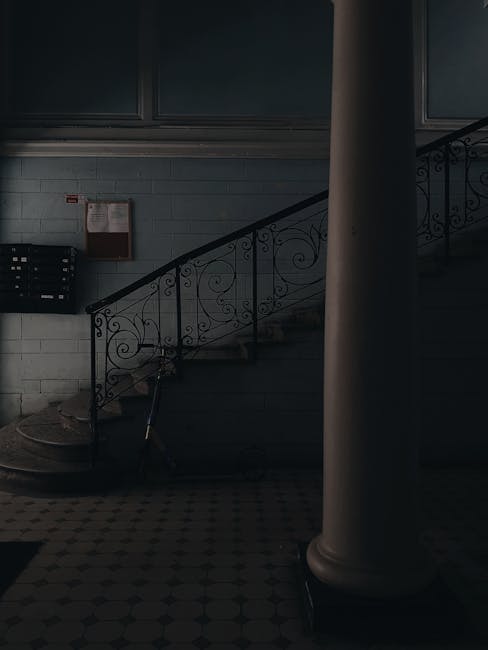
Dealing with Narrow Staircases in UB6 Tenements
Posted on 10/06/2026
Moving through an old tenement staircase can feel like trying to thread a wardrobe through a needle. If you are dealing with narrow staircases in UB6 tenements, you already know the awkward corners, steep turns, and tight landings can turn a simple move into a slow, sweaty puzzle. The good news? With the right plan, the right packing approach, and a bit of local know-how, it becomes a lot more manageable.
This guide breaks down what makes UB6 tenement stairwells so challenging, how to prepare properly, what tools and methods actually help, and when it makes sense to call in experienced movers. We'll also cover common mistakes, safety considerations, and a practical checklist you can use before moving day. No fluff. Just the stuff that saves time, stress, and probably a few dents.
Why Dealing with Narrow Staircases in UB6 Tenements Matters
UB6 has plenty of older flats and tenement-style buildings where the staircase was never designed for today's bulkier furniture, larger mattresses, or heavy appliances. That matters because the staircase is often the single hardest part of the move, not the van ride, not the paperwork, and not even the parking. It's the squeeze. The twist. The awkward moment where a sofa decides it no longer wants to cooperate.
When a stairwell is tight, every item becomes a risk assessment. You have to think about the width of the object, the height of the landing, the angle of the banister, and whether there's enough room to tilt and rotate safely. If you skip that thinking, the move can stall halfway up the stairs. In the worst case, you end up with damaged walls, scratched furniture, sore backs, and a very long afternoon.
For people moving in or out of UB6 tenements, this is not a rare edge case. It's normal. That's why local move planning should always start with access, not with packing tape. If you want a broader moving mindset before the heavy lifting begins, the approach in organised decluttering before moving day is a sensible place to begin.
Narrow stairs do not just slow a move down; they change the whole strategy. The more carefully you plan the route, the fewer surprises you get halfway through a landing turn.
How Dealing with Narrow Staircases in UB6 Tenements Works
There isn't one magic trick. Dealing with narrow staircases in tenements is a process of measuring, simplifying, protecting, and moving in the right order. Think of it as a series of small decisions that add up to a much safer and smoother outcome.
First comes the assessment. You look at the stairwell, the property entrance, the hallway turns, and the items themselves. A lot of people underestimate how much difference a banister can make. A few centimetres on a corner can decide whether a wardrobe goes through upright, sideways, or not at all. That's why actual measurements are better than guesswork. Let's face it, "it should fit" is not a method.
Next comes preparation. Furniture may need to be disassembled, boxed items may need smaller loads, and fragile pieces may need better wrapping. If you are moving a sofa, for example, there's real value in understanding how it should be protected and positioned before it ever reaches the staircase; this is where sofa protection and careful stowing can make a genuine difference.
Then there's the movement itself. The safest approach is usually controlled, slow, and coordinated. One person leads, another guides, and someone else watches for snag points, wall contact, and balance changes. On a narrow staircase, speed is rarely your friend. Smooth movement is.
In more difficult cases, items may be carried in sections, rotated on landings, or temporarily held while the route is reset. That pause can feel annoying in the moment, but it often prevents the kind of rushed lift that causes damage.
Key Benefits and Practical Advantages
Doing narrow-staircase moves properly is not just about avoiding disaster. It brings some very real advantages that make the whole move feel less chaotic.
- Less risk of damage: Furniture, walls, bannisters, and door frames are all less likely to get chipped or scratched.
- Safer lifting: Coordinated handling reduces the chance of strains, slips, and awkward twists.
- Better time control: A planned move may be slower at the start, but it tends to finish more predictably.
- Lower stress: Once the route and item order are set, you stop improvising every two minutes.
- Smarter use of space: Breaking items down properly helps you make the staircase work for you rather than against you.
There's also a mental benefit people forget about. When the tricky part of the move is under control, everything else feels easier. The boxes seem lighter, the van loading feels more organised, and the day gets its rhythm back. That matters more than people realise.
Who This Is For and When It Makes Sense
This is for anyone moving in or out of a UB6 tenement, but especially for people handling larger or awkward items. A narrow staircase can become a problem very quickly if you are moving a sofa, a mattress, a bed frame, a wardrobe, a piano, or even a bulky freezer. Students moving into compact flats, families leaving upper-floor homes, and office users relocating equipment all run into the same basic issue: limited space and limited margin for error.
It also makes sense when you are short on time or don't have enough hands to manage the job properly. A stairwell that looks "fine" on a normal day can feel completely different when you are carrying something wide, heavy, and expensive. Truth be told, a lot of moving disasters start with overconfidence and a tight corner.
If you are moving a bed or mattress, it helps to prepare specifically for the shape and flexibility of that item. A useful reference point is bed and mattress relocation best practice, because bedding items often look simple right up until the stairwell says otherwise.
You may also find that some moves are simply better handled by a service built for compact access and careful loading. For many local moves, especially in flats, flat removals in Perivale are designed around exactly these sorts of constraints.
Step-by-Step Guidance
Here's the practical sequence that usually works best. It's straightforward, but the order matters.
- Measure the awkward points first. Check stair width, landing depth, ceiling height, handrail projections, and the size of the largest item. Measure the item at its widest point, not just its tidy flat-pack dimensions.
- Identify what should be dismantled. Beds, table legs, wardrobe doors, and some sofa parts are much easier handled in smaller sections.
- Clear the route completely. Remove mats, loose items, bins, and anything that could snag feet or wheels. If the route is cluttered, it is already harder than it needs to be.
- Wrap and protect surfaces. Use blankets, corner protectors, and proper wrapping so both the item and the staircase are protected.
- Pack the load sensibly. Heavier items should be distributed so you are not carrying one absurdly unbalanced box. If you need a quick packing refresher, smart packing ideas for a successful move are well worth a look.
- Assign roles before lifting. One person leads, one supports, and one watches the clearance. The lead should call each movement clearly.
- Test the first turn slowly. If the item clears the toughest corner, you can usually adapt the rest of the move from there.
- Reset rather than force it. If an angle is wrong, step back and re-approach. Don't muscle through a bad line. That is where accidents happen.
- Load the van in a strategic order. Items that are awkward in the stairwell should be first out and first in, so you are not left dealing with them when everyone is tired.
If this sounds like a lot, it is. But it's a manageable lot when you break it down. One decision at a time. One landing at a time.
Expert Tips for Better Results
Over the years, the moves that go best tend to share the same habits. They are rarely flashy, but they work.
Use the staircase like a route, not a barrier. On the day, treat each landing as a reset point. That tiny pause lets you reposition hands, check balance, and plan the next move. It sounds basic. It is basic. And it helps more than people expect.
Keep the heaviest items closest to the body. The further weight sits from your centre of gravity, the harder it is to control. That matters a lot on stairs, where one bad shift can throw off the whole lift. If you want a better grounding in safe handling, kinetic lifting and movement technique is a useful concept to understand in plain English.
Remove unnecessary air from the job. Big empty boxes are awkward. Loose cushions are awkward. Overly packed bags are awkward too, just in a different way. The trick is to make items compact without making them unstable.
Watch the corners, not just the stairs. Most damage happens at the turning points, where people get focused on the next step and forget the wall beside them. A small swivel can prevent a very visible scrape.
Take the weather into account. A wet entrance or damp shoes can turn a controlled move into a slippery one. In a British winter, that's not a theoretical issue. It's Tuesday.
Have a backup plan for impossible items. Sometimes the best answer is temporary storage, partial dismantling, or a different lifting method. For bulky items that do not need to be moved immediately, storage in Perivale can take the pressure off and buy you time to move properly.
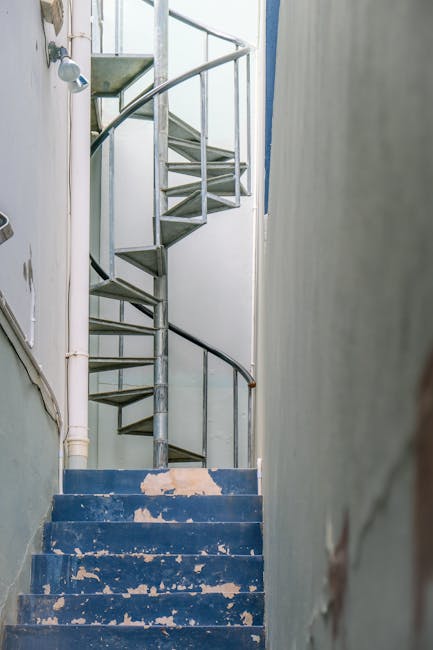
Common Mistakes to Avoid
Most narrow-staircase problems are predictable. That's the annoying bit. The same mistakes show up again and again.
- Measuring only the item, not the route. The route is usually the real issue.
- Trying to carry too much at once. One trip saved is not worth one damaged back.
- Forgetting about corners and bannisters. Straight sections are rarely the problem.
- Using poor communication. Silent lifts are risky lifts.
- Rushing because "it's nearly done." That is exactly when mistakes happen.
- Skipping dismantling steps. A quick removal of legs or shelves can transform the job.
- Ignoring weight distribution. Uneven loads are harder to balance on stairs.
One very common mistake is assuming a narrow stairwell can be handled by pure strength. It can't, not reliably. Strength helps, of course, but technique and teamwork matter just as much. Sometimes more.
Another one: people pack so efficiently that they forget they also need to carry the items. Nice, tidy boxes are great until the box shape becomes impossible on the turn.
Tools, Resources and Recommendations
You do not need a van full of specialist kit to manage a tight tenement staircase, but a few sensible tools can make life much easier.
- Furniture blankets: Good for protecting corners, polished surfaces, and stair edges.
- Ratchet straps or strong tie-downs: Helpful for securing loads in the van and keeping dismantled pieces together.
- Gloves with grip: Better control, less slipping, and fewer sore hands by the end of the day.
- Corner protectors: Especially useful where bannisters or wall edges are close to the load.
- Basic tool kit: Screwdrivers, Allen keys, and a spanner can save a lot of time when dismantling furniture.
- Labels and marker pens: Simple, but brilliant when furniture has to be taken apart.
It also helps to prepare the home before the move. A cleared, clean route reduces friction in every sense. If you want a practical pre-move reset, how to make sure your home is spotless before moving covers the kind of prep that makes the staircase easier to manage too.
For readers comparing moving support options, it can be useful to look at the full range of local help available, including services overview and man and van support in Perivale if you need something flexible rather than a full-scale move.
If your move is at the more sensitive end of the scale, such as a piano, the advice changes again. Pianos are not just heavy; they are awkwardly balanced and highly vulnerable to impact. That's why dedicated piano removals in Perivale are a different sort of job altogether.
Law, Compliance, Standards, or Best Practice
For domestic moves, there is not one single rulebook for staircases in tenements, but there are still important safety and best-practice expectations. Anyone handling heavy or awkward items should think in terms of reasonable care, safe lifting, and clear communication. That applies whether the move is private, student-related, or business-related.
Good movers also take insurance and property protection seriously. If an item is difficult to move safely through a narrow stairwell, the responsible choice may be to disassemble it further, use additional protection, or pause and reassess rather than force it through. That is not overcautious. It is professional.
There are also general health and safety expectations around manual handling. In plain terms, avoid twisting while carrying, keep loads stable, do not carry items that are clearly too heavy for one person, and use enough people for the job. If you're asking whether a move is safe as planned, that question is already worth listening to.
For added peace of mind, it helps to work with a mover that treats safety as part of the service rather than an afterthought. Pages like insurance and safety and health and safety policy are useful markers of that approach. So is a clear set of terms and conditions, because nobody enjoys surprises once the van is already loaded.
Accessibility matters too. Older tenements can be physically challenging, and any move plan should respect the needs of residents, neighbours, and anyone with mobility concerns. A thoughtful approach keeps things calmer for everyone in the building.
Options, Methods, or Comparison Table
There are a few common ways to deal with a narrow staircase, and the right choice depends on the item, the building, and your time pressure. Here's a simple comparison.
| Method | Best For | Pros | Watch Outs |
|---|---|---|---|
| Careful manual carry | Smaller furniture, boxes, lighter household items | Flexible, cost-effective, easy to adjust on the stairs | Requires good coordination and enough people |
| Dismantling before the move | Beds, wardrobes, tables, modular furniture | Makes awkward items far easier to handle | Needs tools, time, and labelled parts |
| Staged move with storage | Bulky items, delayed moves, renovation overlap | Reduces pressure on move day, allows better planning | Requires extra coordination and possibly extra cost |
| Specialist removals support | Large, valuable, or awkward items; difficult tenement access | Better handling, less risk, smoother execution | Needs booking and clear communication in advance |
In a lot of UB6 tenements, the best answer is a mix. A few items can be carried normally, some dismantled, and the awkward ones managed with specialist support. That hybrid approach is often the most realistic one. Not glamorous, but effective.
Case Study or Real-World Example
Imagine a first-floor flat in UB6 with a tight stairwell, a narrow bend just after the entrance, and a sofa that looked reasonable in the living room but suddenly enormous near the bannister. It's a familiar kind of headache. The sort that makes you stare at the stairs for a second and just think, "Right. How exactly are we doing this?"
In a case like that, the solution usually starts before the lift. The sofa would be measured, cushions removed, and any detachable parts separated. The route would be cleared. The team would agree who leads and who guides. Then the first movement would be slow and controlled, with the sofa turned only after the initial tight point had been tested.
On the landing, the lead would stop, reset grip, and angle the sofa around the corner rather than forcing a straight carry. That small pause matters. It gives you time to check the wall clearance and stop the item from snagging against the rail. In practical terms, it is the difference between a neat turn and a battle.
For heavier or more delicate items, a move like this may also be broken into two stages: safe transport to storage, then final delivery when the route is clearer or extra help is available. It is not the fastest option, but sometimes it is the wisest. If you are planning a move under time pressure, same-day removals in Perivale can help in situations where timing matters, although narrow stair access still needs the same careful planning.
Practical Checklist
Use this before moving day. Honestly, it saves a lot of awkwardness.
- Measure staircase width, landings, ceiling height, and the widest points of furniture.
- Check whether the largest items need dismantling.
- Clear the route from front door to van.
- Protect walls, banisters, corners, and the item surfaces.
- Sort boxes by weight so no single box becomes a brute.
- Assign one clear lead person for the stair move.
- Test the hardest corner first, slowly.
- Keep hands dry and footwear secure.
- Label parts, screws, and fittings if furniture has been dismantled.
- Have a backup plan if an item will not safely fit.
If you want a fuller pre-move routine, the combination of decluttering before moving, smart packing, and careful access planning gives you a much cleaner start than simply hoping for the best.
Conclusion
Dealing with narrow staircases in UB6 tenements is really about preparation, patience, and knowing when to stop forcing a problem. The stairwell is often the part of the move that decides the mood of the whole day, so treat it with the respect it deserves. Measure properly, pack sensibly, protect surfaces, and keep the lift coordinated.
Some moves will still be fiddly. That is just the nature of old buildings. But fiddly does not have to mean stressful. With the right process, the right equipment, and the right support, you can get furniture and boxes through even awkward access points without turning the place upside down.
If you are comparing ways to handle a tight move, it may also help to explore furniture removals in Perivale or broader removal services in Perivale to see what level of help fits your situation best. And if the move is larger or more complex, removals in Perivale can give you a more complete solution without making the staircase the enemy.
Get a free quote today and see how much you can save.
At the end of the day, the smartest move is the one that gets your things there safely and keeps everyone standing upright. Simple enough, really.